Alexander Kidder is the CEO of KidderCorp, a Veteran-owned business specializing in the design and manufacturing of custom challenge coins. He brings years of expertise to preserving military traditions and helping organizations tell their unique stories through physical craftsmanship.
What 20 Years of Running a Veteran-Owned Business Taught Us About Surviving the First Five

In 2005, my father wanted a challenge coin for his Navy retirement. He was a Command Master Chief finishing a long career, and all he needed was a coin he could be proud of handing out for the ceremony. It turned out to be harder than it should have been. Vendors were slow to reply. Pricing moved around. The whole process felt like more work than it should have.
My father‘s reaction was very him: “I can probably figure this out myself.”
So he did. He researched it, made the coin, and then friends who were retiring or planning command events started asking for help. One retirement coin quietly turned into KidderCorp. Twenty years later, I run the company with my sister Amanda handling daily operations, and we have made coins for units, commands, and Veteran groups across every branch.
I did not plan any of that and I have watched a lot of Veterans start businesses over the years, and I have made most of the mistakes myself. So if you are a Veteran thinking about starting your own business, here is what two decades taught us about the part nobody warns you about: surviving the first five years.
“I think I can do this myself” is usually how it starts
Almost every Veteran-owned business I know began the way my father’s did. Someone hit a problem, looked at the available options, and thought, “I could do this better.”
That instinct is a strength. The military trains you to look at a broken process and fix it without waiting for permission. It is also how a lot of good companies get started, because the best ones usually solve a problem the founder personally felt.
But the same instinct has a blind spot. Being able to make the thing is not the same as being able to run the business that makes the thing. My father could make a better coin than the vendors who frustrated him. Turning that into a company that ships on time, answers the phone, and pays its people every month was a separate skill, and it took years to build.
If you are starting because you know you can do the work better, good. Just go in knowing the work is the easy part.
Know the difference between a hobby and a business
For the first few years, KidderCorp was not really a company. It was a serious hobby. A makeshift office in my father‘s house, orders shipping out of the garage, customers who came from his Navy network. It worked, but it ran on him personally. If he went on vacation, the business went on vacation.
I joined in 2009. My father was planning a trip and needed someone to keep things moving while he was gone. I took over for that month, cleaned up the workflow, made the processes consistent, and when he came back we split the work. That month was the real line between “my dad's coin project” and an actual operating business.
Here is how you know you have crossed that line. A hobby depends on you being there. A business keeps running when you are not. The day the orders still go out correctly while you are on a plane is the day you have a company. Until then, you have a job you happen to own.
The first three to five years are where most quietly fold
Nobody fails dramatically. They just run out of road.
The barrier to entry in most fields looks low, and ours is no exception. New coin vendors show up all the time. Some have terrific artists. Some compete only on price. And a lot of them are gone in a few years, because running a business is harder than making a product.
You have to serve the customer, pay your people, manage cash flow, survive the slow seasons, eat your own mistakes, and keep going when the world hands you something strange. In our twenty years that has included war, COVID, oil prices, and shipping disruptions, and there will always be a next thing you did not plan for.
What carried us through was not clever. It was the boring discipline my father set at the start: answer the customer, be clear about pricing, get the details right, and do not make people chase you. That is it. In a field full of vendors who disappear, being reliable for five years straight already puts you ahead of most of them.
Veteran-owned is not a marketing strategy
This one matters, especially for this audience, so I will be blunt about it.
Being Veteran-owned is real and it means something. But in our experience, it is not why people buy from you. Our customers are mostly military but they did not choose us because of a label. They chose us because someone they trusted said we made their life easier, and because the last coin we made came out right.
The military community runs on word of mouth. People remember the vendor who nailed the deployment coin under a tight deadline, and they remember the one who made it harder than it had to be. We have never been a heavy advertising company. For most of our history, new customers came because an old customer vouched for us. That is the best marketing there is, and you cannot buy it. You earn it by doing the job well enough that people are willing to put their name behind your work.
So lead with the work. Veteran-owned is who you are. It is not the pitch.
“Lifestyle business” is not a slur
Somewhere along the way, “lifestyle business” turned into an insult, as if the only respectable goal is to grow as fast as possible and sell. I do not see it that way.
KidderCorp is a lifestyle business in the best sense of the phrase. We want to grow carefully, keep good people for a long time, and build something stable rather than flashy. I am not trying to turn it into a giant, faceless promotional products company. That is not who we are, and honestly, it sounds exhausting.
A family business has to think differently than one built on growth above all else. Our name is on the company, so longevity, trust, and reputation matter in a way they do not for a faceless brand. I also believe a family business should create opportunity, not a life sentence. Plenty of people have worked with us over the years. Some stayed, some moved on to build their own lives. That is healthy.
If your goal is to build something durable that takes care of your people and lets you sleep at night, that is not settling. For a lot of Veterans, that is exactly the right goal.
The short version
If I had to compress twenty years into one piece of advice, it would be this: liking the product is not enough. Build something useful, not just something interesting, and make sure the business can survive the parts you did not put in the plan.
Making coins was the easy part. Making a successful and sustainable company was hard work. We plan to keep at this for as long as we can keep delivering satisfied customers and amazing coins.

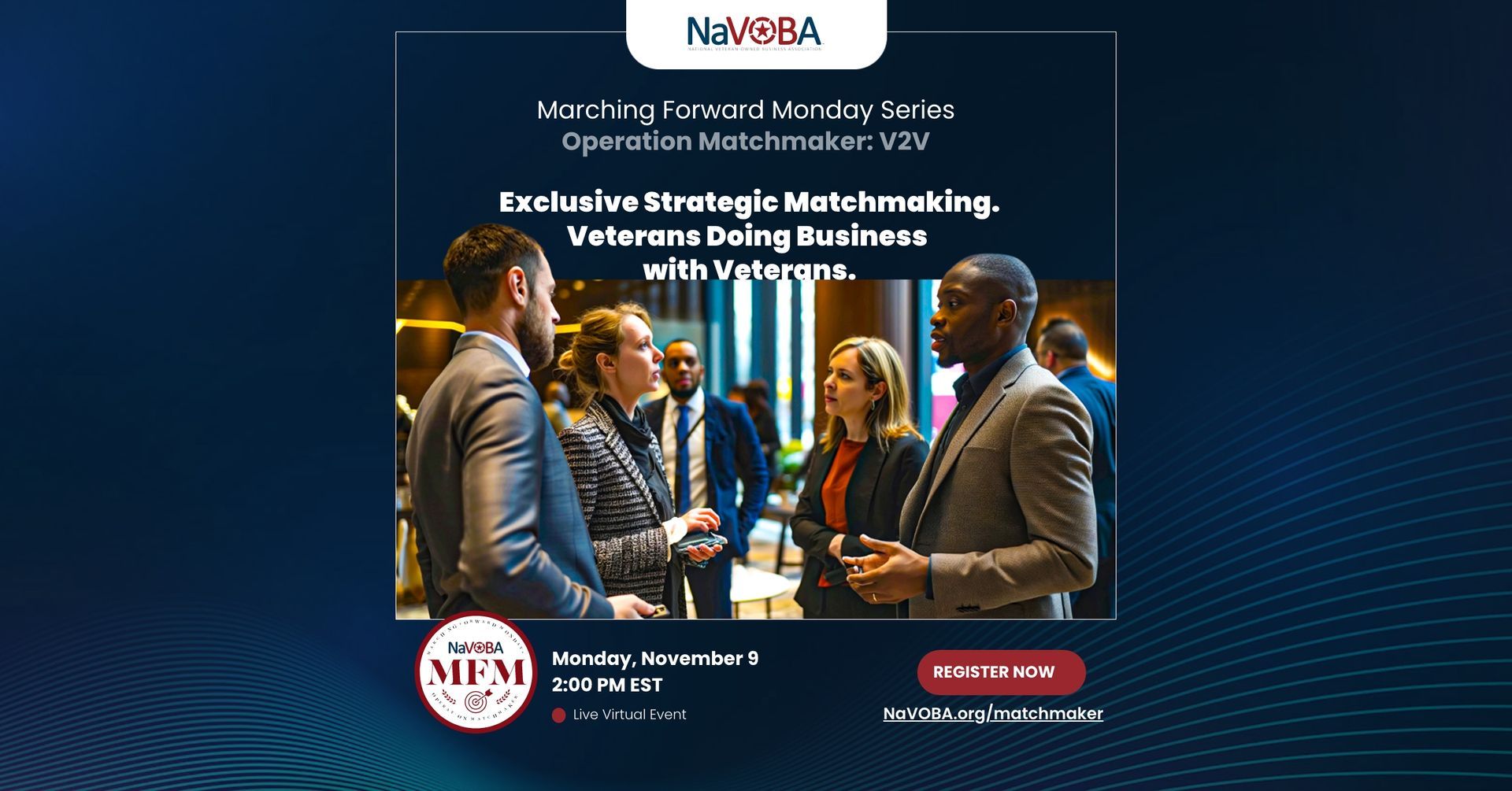
Join NaVOBA’s Operation Matchmaker: V2V on November 9 to connect with Veteran-Owned businesses, explore partnerships and discover new opportunities.
NaVOBA highlights certified Veteran-Owned businesses SYTE Corporation and Double A Inspections featured in Nicor Gas’ 2025 Supplier Inclusion Report.
Meet Army Veteran Joe Meisch, founder of Temple Massager, Inc., and discover how his patented innovation helps service members, Veterans and first responders.
Connect with NaVOBA on Social: